
Health & Recovery
Sports & Outside
Appliances
Automotive
Electronics
Smart Watch Television SpeakerSpeaker
←Cable
←eBook
←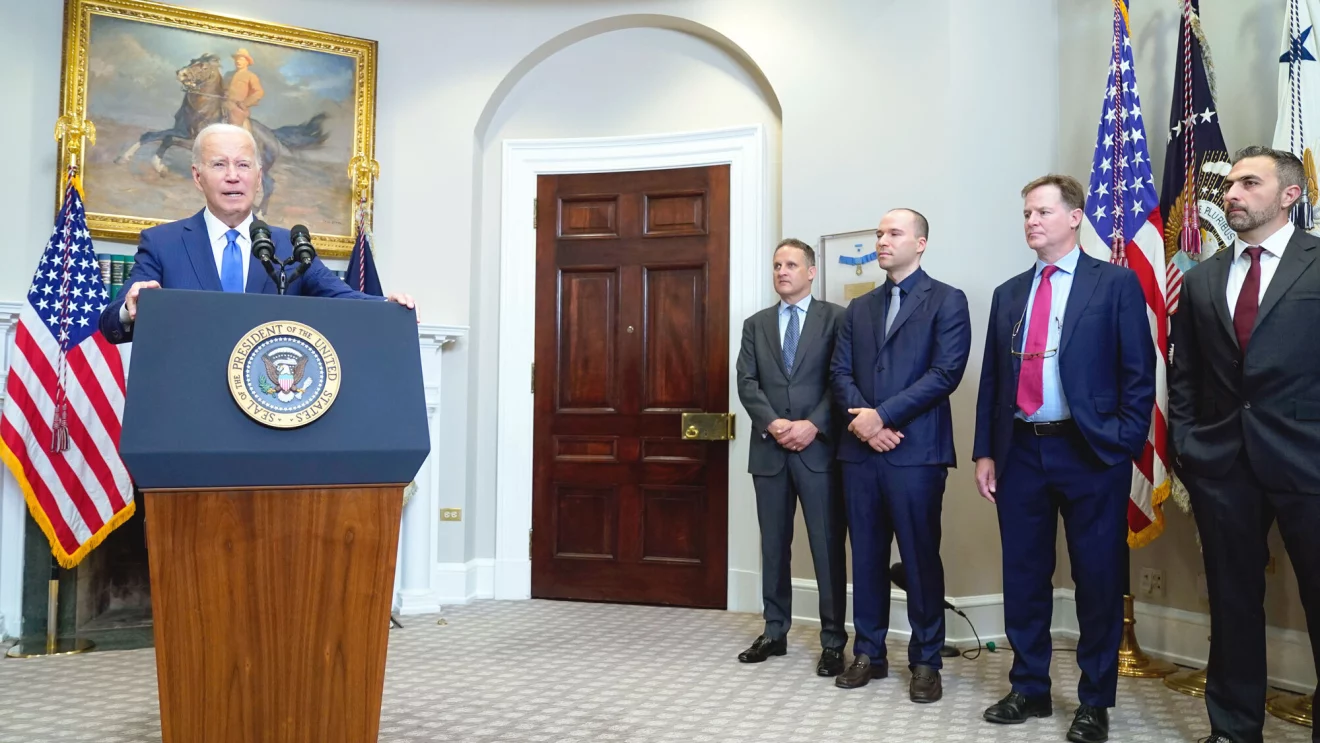
The White House met with leading AI companies to identify commitments related to the safe and responsible development of future generative AI models that are overall more powerful than any currently released foundation models (FMs). These commitments build on Amazon’s approach to responsible and secure AI development, and they will help pave the way for a future that enhances the benefits of AI and minimizes its risks. As part of this engagement, Amazon welcomes the following voluntary commitments to:
At Amazon, we are committed to continued collaboration with the White House, policymakers, the technology industry, researchers, and the AI community to advance the responsible and secure use of AI. As one of the world’s leading developers and deployers of AI tools and services, Amazon supports these voluntary commitments to foster the development of AI that is safe, responsible, and trustworthy. We are dedicated to driving innovation on behalf of our customers while also establishing and implementing the necessary safeguards to protect consumers and customers.
The White House commitments are forward-looking and are aligned with Amazon’s approach to responsible and secure AI development. Amazon builds AI with responsibility in mind at each stage of our comprehensive development process. Throughout design, development, deployment, and operations we consider a range of factors including accuracy, fairness, appropriate usage, toxicity, security, safety, and privacy. For all of our FMs, we continually work to improve our features and learn from customers as they experiment with new use cases.
Responsible use of AI technologies is key to fostering continued innovation, and Amazon is committed to developing fair and accurate AI services. For example, Amazon CodeWhisperer is the only AI coding companion with built-in security scanning for finding and suggesting remediations for hard-to-detect vulnerabilities. On intellectual property, it uniquely provides source code provenance analysis and indicates which open source licensing models may be applicable to generated code. Amazon’s Titan family of foundation models is also built to detect and remove harmful content in the data that customers provide for customization, reject inappropriate content in the user input, and filter the model’s outputs containing inappropriate content such as hate speech, profanity, and violence. And Amazon SageMaker Clarify detects and measures potential bias using a variety of metrics so developers can address potential bias and explain model predictions.